Episcopal Health Foundation

2025 Texas Health
Tracking Poll

2025 · At a Glance

Top Five Findings from 2025

In October and November 2025, EHF and SSRS surveyed 2,054 Texas adults in the eighth wave of the Texas Health Tracking Poll. Five findings capture where the state stands this year — and each one connects to a deeper story below.

From the Research

When Affordability Ends: Marketplace Members Respond to ACA Subsidy Changes
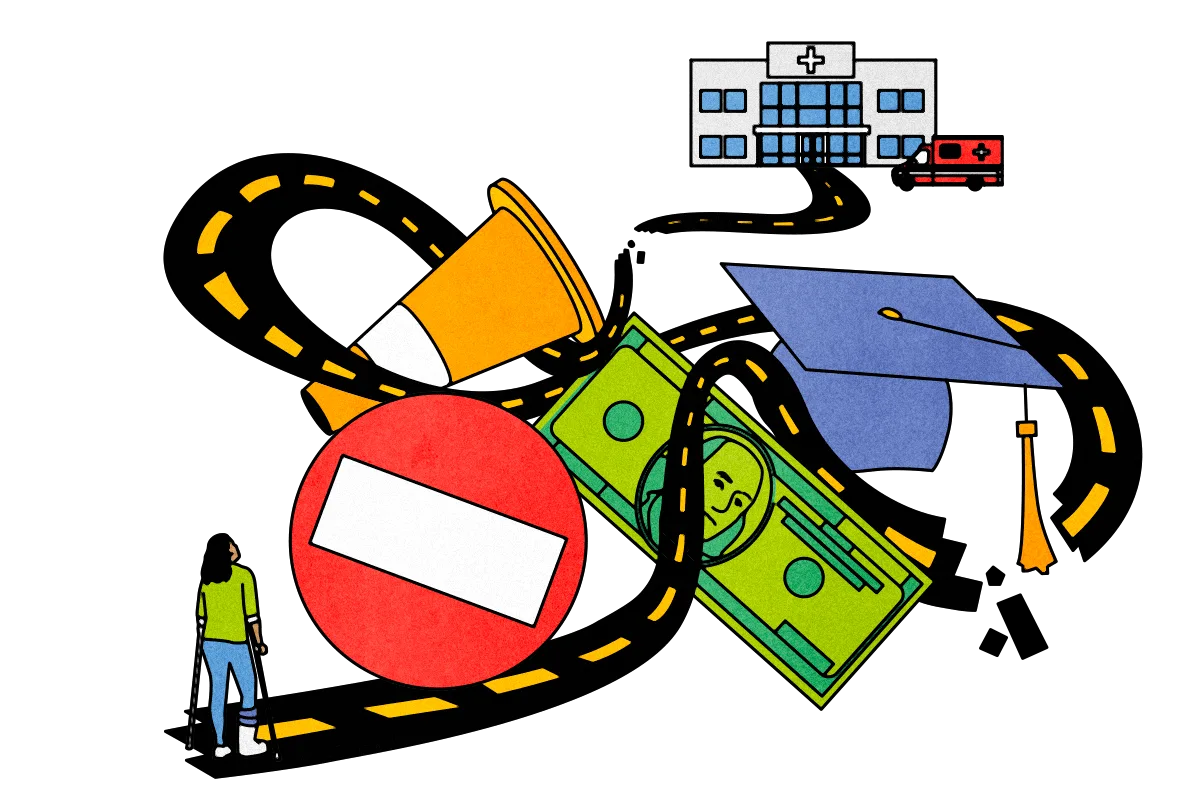
Illustration representing a Texas Marketplace enrollee weighing the cost of health coverage as subsidies shift.

Recent EHF research on Marketplace enrollees highlights how quickly affordability can shift and how uncertainty shapes how Texans use their coverage.

For many enrollees, enhanced subsidies have made health insurance feel within reach, lowering monthly premiums and opening a pathway to care that wasn't possible before. But that affordability is not guaranteed. As subsidies change or expire, even small increases in monthly costs can push coverage out of reach, forcing families to reconsider whether they can stay enrolled.

That uncertainty doesn't just affect enrollment; it affects behavior. Texans report delaying care, stretching medications, or avoiding follow-up visits when they are unsure what their coverage will cost in the months ahead. Continuity of care becomes harder to maintain when coverage itself feels unstable.

This dynamic reinforces a broader pattern seen across this poll. Health insurance can serve as a critical entry point to care, but when affordability fluctuates, that protection can weaken. For many Texans, coverage becomes a partial shield, offering access in theory, but not always in practice.

When Affordability Ends: Texas Marketplace Members Respond to ACA Subsidy Changes
Learn More When Affordability Ends: Texas Marketplace Members Respond to ACA Subsidy Changes Read the report
~1.3M
Texans who could become uninsured if enhanced premium tax credits expire
87%
of those expecting premium increases are worried about affording coverage in 2026
22%
of marketplace enrollees don't know if they receive subsidies, and are least likely to re-enroll

Our poll captured just how heavy the barriers could be for Texans.

At the time of the poll, there was an impending threat of the enhanced Affordable Care Act (ACA) premium tax credits expiring, so we asked Texans to share how these major federal changes would shape their decisions.

During the time of the poll in October 2025, 15% of Texas adults say they received their health insurance through the ACA marketplace, and among ACA enrollees, 41% received premium tax credits that helped make health insurance more affordable. Many ACA enrollees were already expecting higher costs, 42% say they thought their premiums would increase in 2026.

Marketplace enrollees are not the only group vulnerable to these changes. An overwhelming percentage of Texans expressed some level of concern about impending federal cuts to health and nutrition programs and what their families may have to overcome in the future.

Many Texans Are Aware of the Federal Cuts and Share Concerns About the Expected Impact
Share of all Texas adults who say each of the following
Medicaid Enrollees and Food-Insecure Texans Are Most Worried About Federal Spending Cuts
% "Very worried" cuts will hurt them and their family, by group. Groups reflect different characteristics (insurance, food security, race/ethnicity) and overlap.
4.5×
Food-insecure Texans are 4.5 times as likely to have medical bill problems as food-secure Texans
36.6%
of all Texans skipped 3 or more types of care due to cost (out of 6 measured)
61%
of adult Texans skipped or postponed at least one type of care due to cost

For many Texans, the challenge isn't just affording one type of care; it's navigating multiple unmet needs at the same time.

Across the state, 61% of adult Texans say they skipped or postponed at least one type of care due to cost (dental care, recommended tests or treatments, filling prescriptions, medication doses, mental health care, or other needed health care), and more than a third (37%) say they skipped three or more types of care. Dental visits and recommended check-ups are among the most commonly delayed, pointing to a pattern where routine and preventive care are often the first to fall away when costs rise.

These pressures are even more pronounced for Texans with lower incomes. Among those covered by Medicaid, nearly eight in 10 (76%) report skipping at least one type of care due to cost, and nearly half (48%) say they went without three or more types of care; the highest rate among insured groups. Coverage alone is not fully protecting people from having to make difficult trade-offs.

And it's not just about health care costs. For Texans experiencing food insecurity, the strain multiplies. They are much more likely to report medical bill problems and to delay care across multiple areas, underscoring how financial instability in one aspect of life can quickly affect others.

Taken together, these findings point to a reality many Texans are navigating: challenges rarely happen in isolation. Even as some measures of affordability have improved, many families are still juggling overlapping pressures, making it harder to stay healthy.

Explore the compounding effects of income, insurance, and food security

Filter both panels by population group to see how medical bill problems and skipped care vary across Texas.

Population:
Food insecurity multiplies health risks and costs push Texans to skip care
Food Insecurity as a Health Multiplier
Types of Care Skipped Due to Cost
53%
of adult Texans say the state isn't doing enough for pregnant women, up 15 points from 38% in 2018, an 8-year high
−13 pts
Drop in uninsured rate since 2020, from 35% to 22% in 2025
75.5%
of Medicaid/STAR enrollees still skipped at least one care type due to cost

In recent years, Texas has made meaningful progress in reducing the number of people without health insurance. Since 2020, the uninsured rate has dropped 13 points from 35% to 22% in 2025, marking a significant shift in coverage across the state.

But coverage alone doesn't capture the full story. In many ways, it operates more like a partial shield than a full guarantee of care.

In 2025, the share of Texans who say the state is not doing enough to help people access care reached its highest level in the eight years of this poll. Seven in 10 Texans (70%) say the state is falling short for low-income adults, with majorities also saying the same for children (59%) and pregnant women (53%). For pregnant women in particular, this reflects a sharp increase, from 38% in 2018 to 53% today, indicating growing, not diminishing, concern over time.

These concerns are mounting even as more Texans gain coverage, underscoring a disconnect between having insurance and being able to use it. As we saw in earlier findings, many Texans, especially those with Medicaid, are still skipping care due to cost, while others face barriers like provider shortages, transportation challenges, and out-of-pocket expenses that make care difficult to access in practice.

Taken together, this suggests that while coverage has expanded, many Texans still don't feel meaningfully closer to care. And across communities, there is a growing sense that the systems meant to support them are not keeping pace with their needs.

Uninsured Rate (Under 65), 2018–2025
Annual share of adults under 65 without health insurance — a 13-point drop since 2020
Coverage Doesn't Guarantee Access
Medicaid/STAR enrollees who skipped care due to cost in the past year

Texans say the state is falling short — and concern is rising

Every group reached an 8-year high in 2025. Filter to see each population's eight-year trajectory.

Across every group, more Texans say the state isn't doing enough, 2018–2025
Show:
A Texan's Story

Living with Type 2 Diabetes: Imagine Maria.

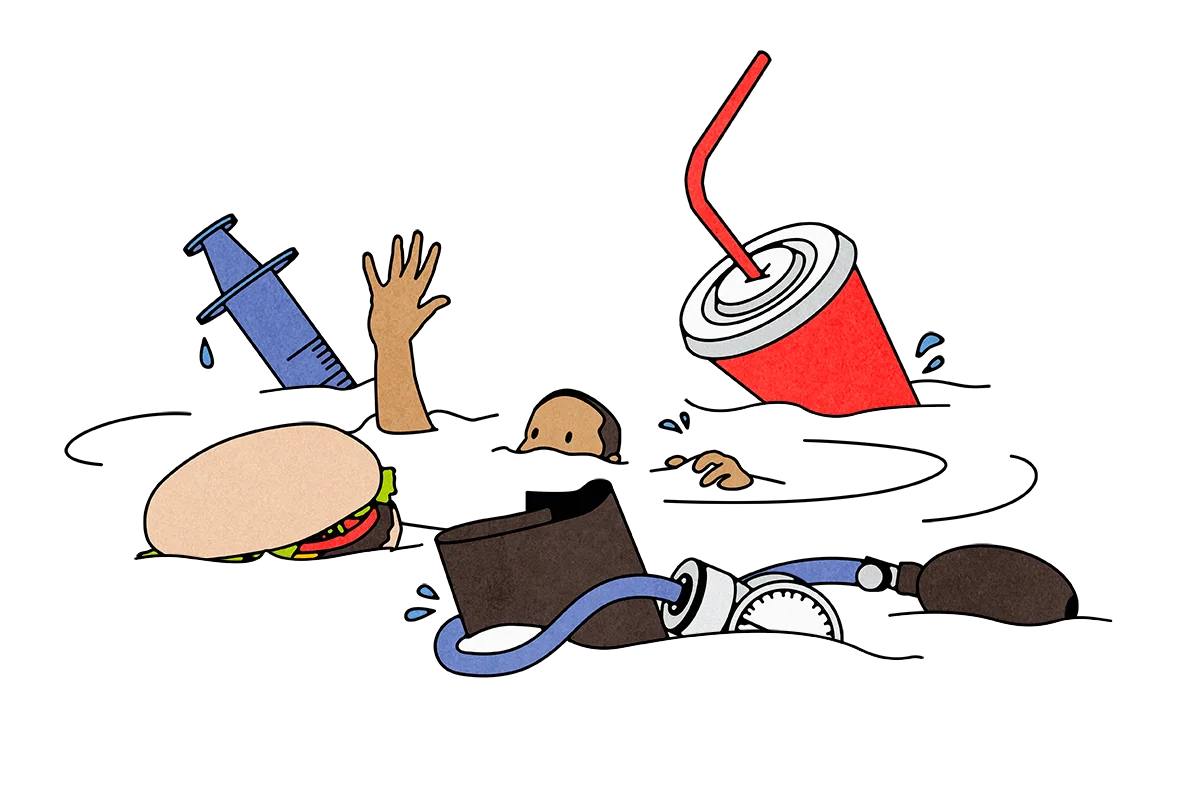
Illustration of a person submerged in water surrounded by fast food, a syringe, an empty wallet, and a sugary drink — representing the daily pressures of managing diabetes alongside food and financial strain.

Maria lives in a small town just outside of Laredo, where the nearest full-service grocery store is nearly 30 minutes away. She was diagnosed with Type 2 diabetes five years ago, after a routine check-up she almost skipped because of the cost. Since then, she's been told repeatedly to "eat better," but healthier options are often more expensive or simply unavailable. Most weeks, she relies on a nearby convenience store, where fresh produce is scarce and processed foods are more affordable and accessible.

Maria receives SNAP benefits, but they don't always cover the foods her doctor recommends. When money is tight, she's postponed follow-up visits and rationed her medication to make it last longer. Over time, she has noticed a decline in her energy and an increase in difficulty managing her blood sugar—clear signs of how closely her health is tied to what she can afford and access each day.

Illustrative composite based on poll findings

Highlighting Lived Experiences of People Living with Pre-Diabetes & Type 2 Diabetes
Learn More Highlighting Lived Experiences of People Living with Pre-Diabetes & Type 2 Diabetes Read the report
48%
of Texas households include someone with diabetes or prediabetes
57.2%
of diabetes/prediabetes-affected households can't afford balanced meals
Communities that lack adequate grocery stores have a prediabetes rate 8.3 pts higher than communities with access to adequate grocery stores

Chronic conditions like diabetes are widespread across Texas. Nearly half of households (48%) include someone with diabetes or prediabetes, and 76% of Texans say it is a major problem.

Managing diabetes requires consistency—regular meals, stable access to healthy food, and ongoing care. But for many Texans, those conditions are difficult to maintain. Among households with diabetes or prediabetes, 57% say they can't afford balanced meals, compared to 41% of households without these conditions. Over time, those gaps add up, making it harder to stabilize blood sugar, prevent complications, and stay healthy.

Where people live further shapes what's possible, not only for managing disease, but for preventing it in the first place. In communities without reliable grocery access, prediabetes rates are higher, suggesting that limited access to healthy food can increase risk long before a diagnosis is made. And as food insecurity deepens, familiar patterns persist: more medical bill problems, more skipped or delayed care, and worsening physical and mental health.

Across this poll, a consistent picture is emerging. The strain Texans experience is rarely tied to a single issue; it builds over time. When access to healthy food is limited, it doesn't just affect what people eat; it contributes to a gradual decline of health, making chronic conditions both more likely to develop and harder to manage.

Health outcomes steadily worsen as food security decreases
  • Food security: No reported indications of food access problems or limitations
  • Low food security: Reports of reduced quality, variety, or desirability of the food they can afford
  • Very low food security: Reports of multiple indications of disrupted eating patterns
  • Often insufficient: Food running short on a regular basis

Explore the connections between food and health

Dig into the data across diabetes, grocery access, and rural concerns to see how food and health outcomes connect.

Households affected by diabetes or prediabetes face compounding hardship across multiple dimensions
93%
of adult Texans say their community lacks at least one non-medical driver of health
77%
of rural Texans say their community lacks public transportation vs. 53% urban
37 pts
perception gap on maternal mortality: Black women (68%) vs. White women (31%)

Across Texas, many adults say their communities are missing key building blocks for good health, whether that's access to care, reliable transportation, healthy food, or stable, well-paying jobs.

These gaps are not evenly distributed. Rural Texans consistently report larger shortages across every area measured, including access to doctors and nurses, grocery stores, transportation, and economic opportunity. Fewer resources limit options and, over time, reduce the ability to stay healthy or recover from challenges. As seen throughout this poll, where people live continues to shape what is possible for their health.

Some gaps are also shaped by lived experience in less visible but equally significant ways. Maternal mortality stands out as the most racially polarized issue tested, as well as the one with the largest increase in concern over time. The share of Texans who say the state is not doing enough to address maternal mortality has climbed from 38% in 2018 to 53% in 2025.

Within that, 68% of Black women say the state is falling short, compared to 31% of White women.

Taken together, these findings point to a broader pattern across Texas. Access to health is not defined by a single system or service, but by the combination of supports available in a community and for many Texans, those supports remain incomplete, uneven, and, at times, out of reach.

A Majority of Texans Say Their Community Lacks at Least One Non-Medical Driver of Health
% reporting each community-level gap (overall sample)
Rural Texans Are More Concerned About Their Own Family's Food Access Than Their Urban and Suburban Counterparts
Concern about food access for one's own family vs. for Texans generally, by rurality

Maternal mortality: the largest racial perception gap in the poll

Black women are more than twice as likely as White women to call maternal mortality a "major problem."

Maternal Mortality: A Racial Perception Gap
% calling maternal mortality a "major problem," largest racial gap of any issue tested

Explore the gap between urban and rural Texas

Rural Texans consistently report larger shortages across every dimension measured.

Rural Texans report bigger gaps than urban Texans across every resource
% saying their community lacks adequate resources, by urbanicity
View:
From the Research

Closing the Gap: Aligning Systems with What Texans Need to Stay Healthy

Illustration representing the everyday building blocks of health — food, transportation, and stable support — that often sit outside traditional health care.

As Texans describe what's missing in their communities, a clearer pattern emerges: the gap lies not only in resources, but also in how systems are designed to support everyday life. What people need to stay healthy such as reliable food, transportation, and stable support has often existed outside the reach of traditional health care. Closing the gap requires more than adding services; it means aligning systems with the realities Texans navigate.

Recent work in Texas offers an early example of how those gaps can be addressed. Research supported by EHF helped inform new state policy to strengthen how Medicaid identifies non-medical needs—like food, housing, and transportation—and expand the role of community health workers and doulas to help meet those needs.

These efforts reflect a growing recognition that improving health requires more than coverage alone. Across communities the challenge remains the same: it is not only whether support exists, but whether it reaches people in ways that are consistent, accessible, and aligned with what they need to stay healthy.

Texas legislature takes “monumental step” to improve health in addressing the maternal health crisis
Learn More Texas legislature takes “monumental step” to improve health, not just health care in addressing maternal health crisis Read the news release

Over the past eight years, Texas has made real progress in expanding health insurance coverage. More Texans have a connection point to care now than in years past, and the uninsured rate has steadily declined, marking an important shift in the state's health landscape.

But as this poll makes clear, coverage has functioned more as a partial shield than a full guarantee. While it offers a critical layer of protection, it has not been enough to ensure that care is affordable, accessible, or within reach for many Texans.

Across the state, a consistent pattern has emerged. Texans are navigating a steady build of pressures like rising costs, gaps in access to providers, and limited access to basic needs like healthy food and transportation. These challenges rarely stand alone. Instead, they accumulate over time, shaping health in ways that are harder to manage and harder to reverse. Even as coverage expands, many Texans are still skipping care, delaying treatment, and struggling to meet the conditions needed to stay healthy.

That strain is reflected in how Texans view the systems around them. More than at any point in the past eight years, Texans say the state is not doing enough to ensure people can access care, particularly for those already at greater risk.

Looking ahead, this moment carries both progress and possibility. Changes to health insurance affordability and federal support for health and nutrition programs introduce new uncertainty, particularly for Texans already facing multiple barriers. The gains of the past eight years have built a stronger foundation, but without sustained support, that foundation may begin to weaken under the weight of these overlapping pressures.

For eight years, EHF has tracked these trends to understand how health is shaped across Texas communities. This long-term view makes one thing clear: progress is possible, but it is not self-sustaining. Without continued attention to the conditions that shape access, affordability, and daily life, the wear and tear many Texans experience today may define the state's health tomorrow.

Take Action

Explore, Communicate, Learn

+ Add to Information Sheet